

On January 11, 2024, Karen MacNeil published a short dispatch on WineSpeed under a deliberately flat headline: Bye Bye Big Heavy Bottles. The author of The Wine Bible announced that as of 2024 she would no longer write about wines that came in massive, heavy bottles. The line was short enough to fit on a coaster. Its weight was not in the prose.
A wine critic of MacNeil’s stature does not retire a class of bottle on a whim. The dispatch was a small editorial act with a large premise behind it: the bottle, not the wine inside it, has become the single largest carbon liability in the trade. For two decades the industry had absorbed the heavy-bottle convention as a marker of seriousness. MacNeil’s January note was the first time a critic of her reach said the convention had run out of justification.
Where the carbon footprint actually lives
Most assumptions about wine’s environmental cost point to the vineyard: tractors, sprays, irrigation, harvest logistics. The arithmetic does not agree. Across the studies the trade has run on its own supply chain, packaging and transport together account for roughly 30 to 65 per cent of a wine’s total carbon footprint, with the band depending on where the wine is made and where it is shipped. A bottle of Bordeaux drunk in Bordeaux sits at the low end. A bottle of Bordeaux flown or shipped to Singapore or São Paulo sits at the high end.
Like this? The TERROIR Letter arrives every Thursday.
Inside that 30-to-65 per cent range, the glass bottle is the single largest line item. Glass is heavier than every other component in the package by an order of magnitude. It is made by melting silica at fifteen hundred degrees Celsius, a process that runs on natural gas or, in newer plants, electric furnaces. The hotter the furnace and the heavier the bottle, the larger the kilogram of carbon dioxide attached to each empty container before a single drop of wine goes in. Then the full bottle is moved, often across an ocean, on diesel freight. Weight is the variable that compounds at every step.
What a bottle weighs, and what it could weigh
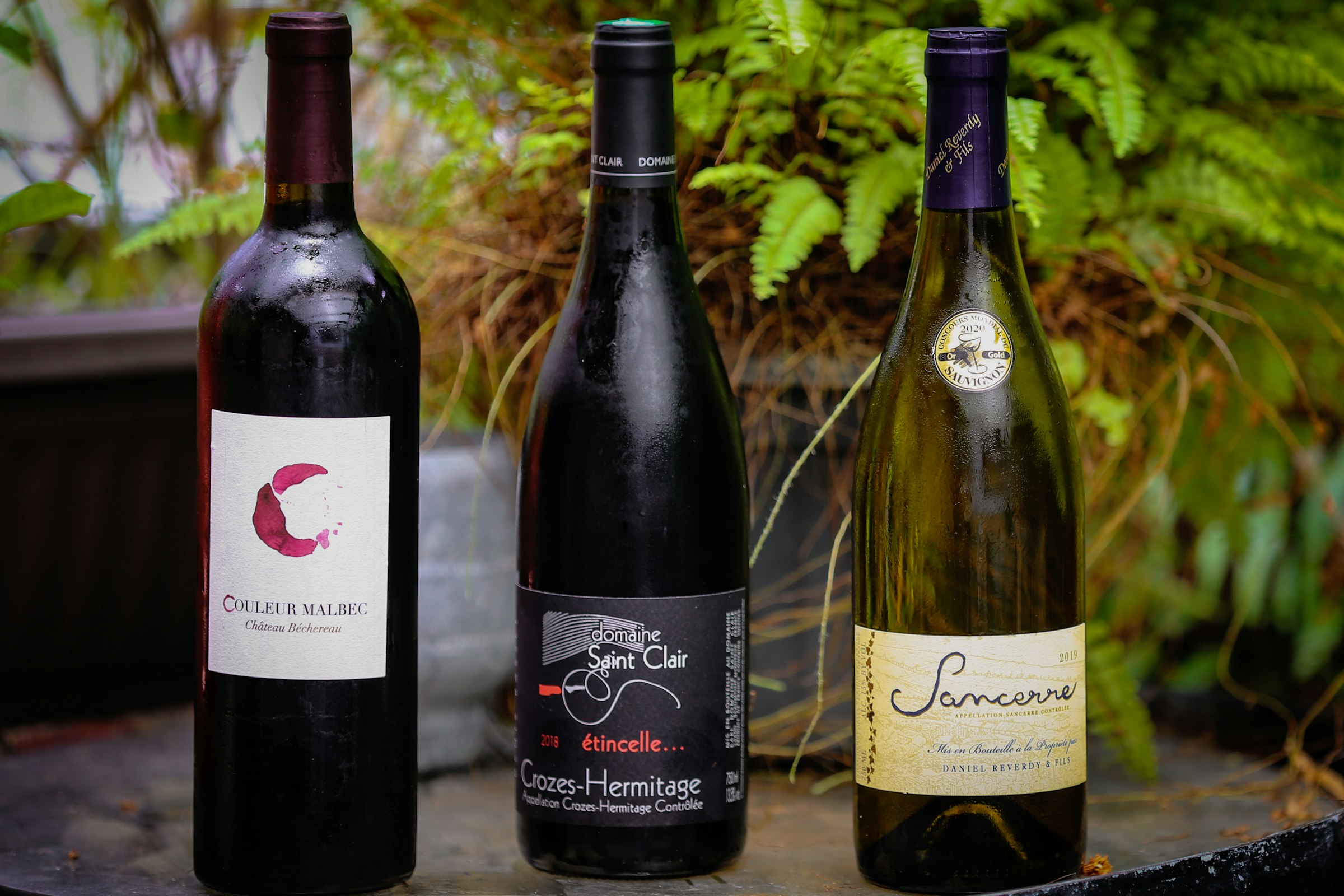
A standard commercial wine bottle weighs between five hundred and six hundred grams empty. That is the baseline against which the rest of the category measures itself. The heavyweight luxury bottles that signal premium on a shelf or a restaurant table generally start at nine hundred grams and run past a kilogram; the heaviest examples in the prestige tier have crossed twelve hundred grams of glass for a single seventy-five-centilitre format. A lightweight bottle, the kind a climate-conscious producer specifies when refitting a packaging line, comes in under four hundred grams. Verallia’s Bordelaise AIR, the named exemplar of the lightweighting movement on the glassmakers’ side, lands at three hundred grams.
The spread between the lightest available bottle and the heaviest is a factor of four. Doubling the weight of the empty bottle roughly doubles the carbon attributable to manufacturing the glass and to moving it. The wine inside the bottle is identical in every case.
Why the heavy bottle persists
The research the trade has done on its own product is unusually clean on one point: there is no correlation between bottle weight and wine quality, no correlation with aging potential, no correlation with how the wine reads on the palate. Heavy glass does not protect the wine more reliably than light glass at the weights the category actually uses. The cork closes the bottle; the glass holds the volume. Past a certain minimal thickness the rest is mass without function.
The heavy bottle persists because it is read, not because it works. A shopper picking a bottle off a retail shelf reaches for the heaviest object in the price tier as a proxy for seriousness. A diner at a restaurant table registers the weight of the bottle as the sommelier sets it down, and the weight is the first piece of evidence about the wine they will receive. Producers who lightweight their packaging face a perception headwind even when the wine in the bottle is identical to what it was the year before. The heavy bottle is quality-signaling theater on the shelf and at the table, and the theater has held because nobody on the consumer side has been asked to update the script.
The shift away from heavyweight glass is producer-led, not regulation-led. Verallia’s pilot lines for sub-four-hundred-gram formats are the supply-side answer; a small cohort of climate-conscious houses, many of them in Bordeaux and the Rhône, have committed to sub-four-hundred-and-fifty-gram standards for their estate wines. MacNeil’s WineSpeed dispatch, brief as it was, is now the editorial counterpart to that supply-side move: a critic refusing to give shelf time to producers who keep buying the heaviest format available. The term of art the trade press uses for the broader shift is “the lightweighting movement,” and the movement is doing what most quiet trade movements do: changing the floor before it changes the ceiling.
What the dispatch means
The carbon arithmetic was already in the open before January 11, 2024. The Verallia line had been running. The producer commitments were already drafted. What MacNeil’s note added was an editorial position from a critic whose readers buy wine. The dispatch did not argue the carbon math; it acted on it. A wine that arrives in a twelve-hundred-gram bottle now has to justify the bottle as well as the wine. That is a different kind of review.
The image worth holding from the dispatch is small. A critic at a desk in early January, writing a one-paragraph dispatch that retires a class of object from her editorial range. The empty heavy bottle on the shelf behind her did not change. The thing that changed is what the bottle has to do to earn its place there.
The TERROIR Letter
The story behind every bottle.
One feature. One dispatch. One bottle worth opening. Every Thursday — free.