

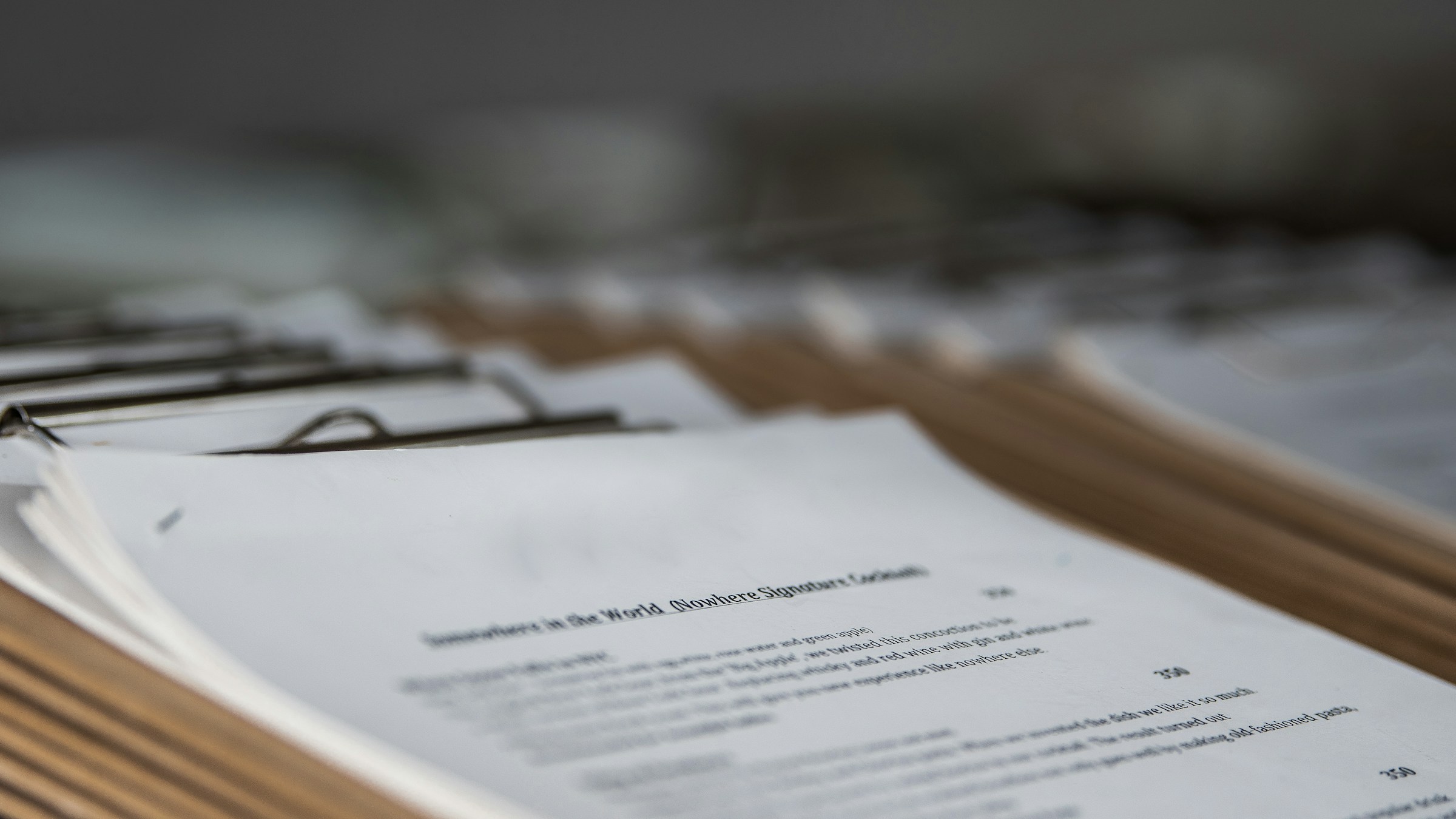
The moment is familiar to anyone who has ever ordered wine in company. The list arrives, the eye slides down the price column, and the finger settles two lines from the bottom: not the cheapest bottle, which would look like a statement, but the one just above it. It feels like a private compromise, discreet and slightly clever. It is neither private nor clever. The list saw you coming, and in some dining rooms it was rearranged precisely for the person you are about to be.
The Second-Cheapest Trap
Behavioral research on restaurant pricing has a name for this reflex: the second-cheapest wine principle. Diners reach for the second-cheapest bottle because, as a 2023 paper in the Wine Business Journal puts it, “they think they get the best deal without looking cheap.” The tendency is measurable. A study commissioned by the Wine & Spirit Education Trust found that roughly 19 percent of British drinkers follow the strategy when ordering wine in a restaurant. And operators know it. The same paper records that restaurants will “occasionally reprice a wine to make it the second-cheapest spot on the menu,” which is worth reading twice. The slot the diner trusts most, the one that feels like the savvy choice, is the one most worth engineering. Whatever bottle carries the house’s most comfortable margin can simply be moved into position, and the reflex does the rest.
Anchors, Decoys, and the Missing Dollar Sign
The second-cheapest trap is one instrument in a larger orchestra. Behavioral economists have known since a landmark 1982 study by Huber, Payne, and Puto that adding an unattractive third option to a choice set can steer people toward the option it was designed to flatter, the so-called decoy effect. The wine world’s version is practitioner lore more than published science: the trophy bottle near the top of the page, rarely ordered, whose real job is to make the far cheaper bottle beneath it feel like restraint. No one has published a rigorous count of how often it works. The mechanism it borrows, however, is among the best documented in the study of choice.
Like this? The TERROIR Letter arrives every Thursday.
Some of the science is more concrete. Researchers at Cornell’s hospitality school ran an experiment at a Culinary Institute of America restaurant and found that diners spent about 8 percent more, an average of $5.55, when the menu listed bare numerals instead of prices with dollar signs. The currency symbol, it turns out, is a small reminder of pain, and removing it loosens the hand. And one cherished piece of menu folklore has quietly collapsed: the “sweet spot,” the upper-right region where a diner’s gaze supposedly lingers and the profitable items go, failed to survive eye-tracking. Diners, the research found, read menus much the way they read books, left page to right, top to bottom. The lever that remains is sequence. What you read first frames everything after it, which makes the first bottles in each section the most carefully chosen sentences on the page.
The People Who Build Them
None of this means every list is a con. Ask the people who write them and the craft sounds closer to editing than engineering. “Across the board at Four Horsemen, we almost always do a 3x markup, which is generally the standard,” Justin Chearno, of the Brooklyn restaurant, told Punch; at Roscioli, wine director Kenneth Crum puts it at “2.5x the cost we pay for the bottle.” Annie Shi, of King and Jupiter in New York, describes deliberately compressing the top of the list, where a bottle that cost $150 “may only be priced at $275,” a smaller multiple than the entry level carries, so that ambition is quietly rewarded rather than punished. And Chase Sinzer, of Penny and Claud, gives his wine directors a mandate that doubles as a philosophy: “no Excel spreadsheet wine list.” A list, in this telling, is an argument about what is worth drinking, not a grid of margins. The two readings are not in conflict. The same tools that can steer a diner toward the house’s margin can steer them toward the producer the sommelier genuinely loves. Architecture is neutral; intent is not.
What an Honest List Owes You
For the reader, the practical lessons are short. The second-cheapest slot deserves your suspicion, not your loyalty; if the budget matters, order the cheapest bottle without apology, since the list’s whole design counts on your unwillingness to. The intimidating bottle at the top of the page is doing a job, and the job is not to be ordered. And the most underused instrument in the room remains a sentence: tell the sommelier what you want to spend, and let them show you where the list is generous. On the better lists, that place exists on purpose. The document you are handed before you order is the most consequential piece of design on the table, and it repays being read the way its authors wrote it: closely, and with an eye on the architecture as well as the wine.
The TERROIR Letter
The story behind every bottle.
One feature. One dispatch. One bottle worth opening. Every Thursday — free.