

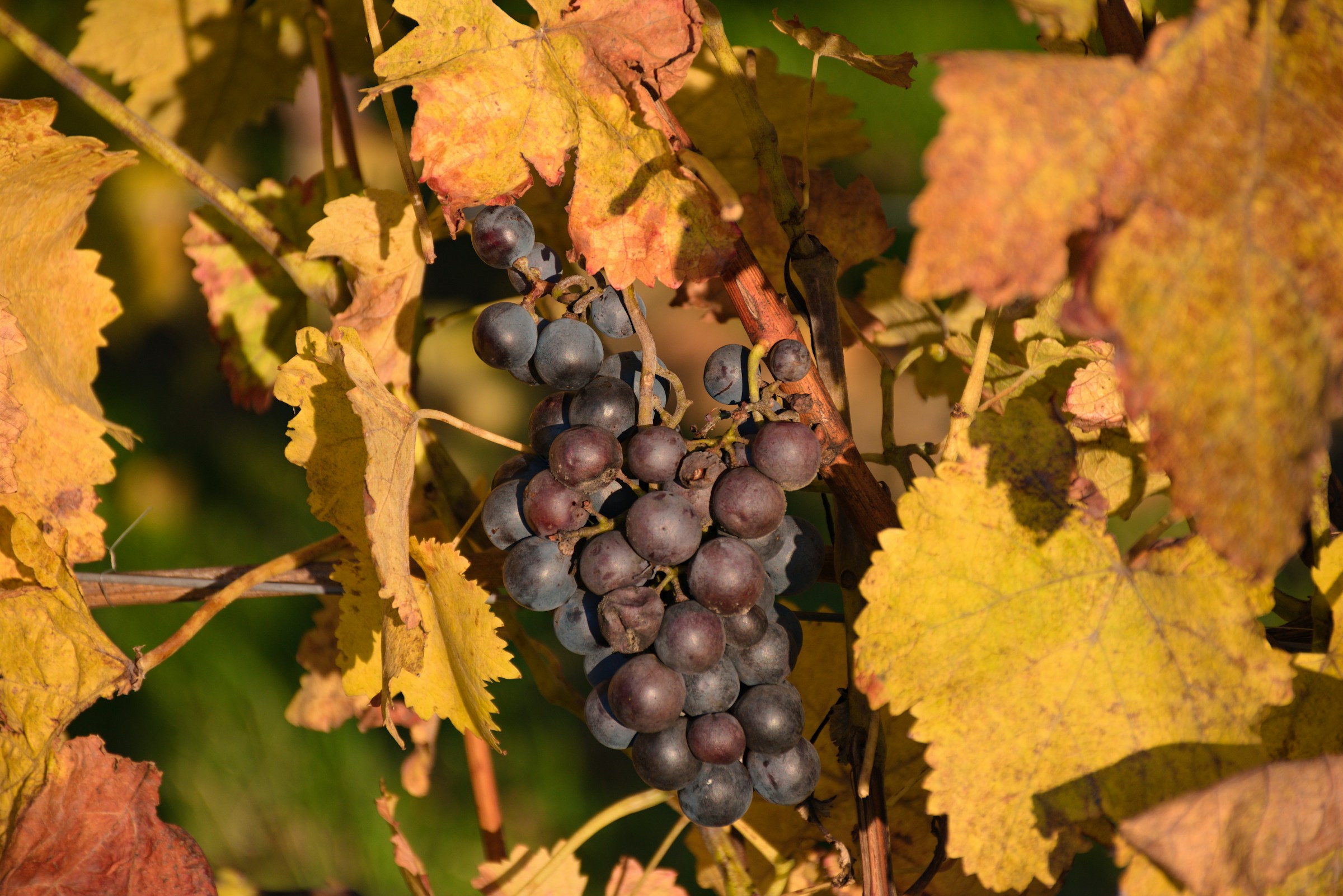
The first time a wine chemist isolated the molecule responsible for the green-pepper aroma in Cabernet Franc, the gas chromatograph was reading concentrations measured in nanograms per litre. Methoxypyrazines do not need much company to make themselves known. At the threshold the human nose first detects them, they are present in the wine at the order of billionths of a gram per litre, which is to say a few parts per trillion: a sensitivity lower than nearly any other aroma compound the lab tracks. The bell-pepper note in a glass of Chinon or a barrel sample from Saint-Émilion is not a poetic descriptor. It is a single class of compounds, present at a vanishingly small concentration, doing what the molecule was selected to do.
The descriptor has divided wine criticism for forty years. One camp finds the herbal lift definitional, the signature that separates Loire Cabernet Franc from anything that ever tried to imitate it. The other camp reads green pepper as a fault, evidence of underripeness or careless canopy work. Both camps are arguing about the same molecule. What they are not always arguing about is where the decision gets made. The decision gets made in the vineyard, months before the fruit reaches the press, and it gets made on a few specific levers that the grower controls.
The molecular signature
Methoxypyrazines (the trade abbreviation is MPs, though the literature also writes IBMP for the specific isobutyl-methoxypyrazine that dominates Cabernet Franc) are a class of nitrogen-containing aromatic compounds. They occur in the green tissue of plants as a defence chemistry: bitter, herbaceous, present in concentrations high enough to discourage insects and grazers from eating the developing fruit. Wine Folly puts the role in plain terms: ‘Methoxypyrazines are responsible for Cabernet Franc’s distinctive bell pepper and herbal aromas. These compounds naturally occur in grape skins as a natural defense against pests.’
Like this? The TERROIR Letter arrives every Thursday.
That paired claim does the load-bearing work. The aroma is not a stylistic flourish or a winemaking artifact. It is the same compound the plant produces to defend itself, carried through fermentation in concentrations the nose registers at the parts-per-trillion floor. The chemistry sets the baseline. Everything else, from the vineyard manager’s pruning decisions to the harvest date to the slope and aspect of the parcel, is a question of whether that baseline gets driven up or down before the fruit comes in.
The family the molecule travels in
Cabernet Franc is the variety the descriptor is most often attached to, but the pyrazine inheritance runs through a broader family. SevenFifty Daily’s science piece names the cast: MPs are present ‘in Cabernet Franc, Sauvignon Blanc — as well as their progeny Cabernet Sauvignon — Merlot, Carménere, and Sémillon’. Cabernet Franc is the parent grape of both Cabernet Sauvignon and Merlot. Carménere and Sémillon share enough of the genetic line to carry the same chemistry. Sauvignon Blanc, the other half of the Cabernet Sauvignon cross, holds the trait independently.
This is why the pyrazine question is not a Loire question. It is a question that follows the family across continents. Carménere in Chile, often planted on warm sites at lower elevations, carries the molecule into a climate where the canopy decisions read differently than they do in Touraine. Sémillon in Bordeaux carries it through a sweet-wine tradition where the herbaceousness is rarely the conversation but is still on the chemistry sheet. A green-pepper note in a Cabernet Sauvignon from a cool corner of Margaret River and a green-pepper note in a Cabernet Franc from Bourgueil are the same compound, expressed at different concentrations, in fruit that descended from a common parent.
The vineyard lever
The viticulture decisions that move pyrazine concentration up or down are well documented. Methoxypyrazines, per SevenFifty Daily’s reading of the Roujou de Boubee research, ‘accumulate early in berry development, with a sharp decline at veraison’. Veraison is the inflection point. The compound concentrates during the green, hard, photosynthetically active phase of berry growth; once the berry softens and shifts into sugar accumulation, the pyrazine signature begins to drop. The interval from veraison to harvest is the window when in-vineyard decisions either accelerate that decline or fail to.
The dominant lever is canopy management. Roujou de Boubee’s experimental work showed that ‘removing shoots and leaves, creating more light exposure’ around the fruit zone in the weeks bracketing veraison ‘all reduced the concentration of MPs in grapes’. The mechanism is light, not heat in isolation: shaded berries retain more pyrazine; berries exposed to filtered direct sunlight on the morning side of the canopy break the compound down faster. Pulling leaves on the east-facing side of a north-south row at veraison is a common practical move; pulling on the west-facing side is riskier in warm climates because it courts sunburn. The producer who wants to retain a degree of pyrazine character (in Chinon, for instance, where the herbal lift is part of the regional grammar) leaves a denser canopy in place. The producer who wants to drive pyrazine down (most warm-climate Cabernet Sauvignon programmes) thins more aggressively. Site contributes a second-order lever: warmer parcels, well-drained soils, and full southern exposure all reduce pyrazine intensity independent of canopy work. The grower who inherits a cool, fertile site is starting from a higher pyrazine floor and has fewer levers below it.
The Loire-Bordeaux line
This is where the climate-and-style geography of Cabernet Franc starts to make sense. The Loire and Bordeaux divide is not a fashion preference; it is a chemistry decision the regional template encodes. Wine Folly’s climate pivot: ‘In cooler climates, you’ll find violet notes, and in warmer climates, expect dried fruit flavors and cayenne pepper notes.’ The Loire Cabernet Franc that reads as violet and graphite over a herbal foundation is the cool-climate expression. The right-bank Bordeaux Cabernet Franc that reads as dried fruit and cayenne over a riper core is the warmer-climate expression. The Chinon producer leaves the herbal grammar legible because the site and the canopy practice keep enough pyrazine on the fruit at harvest to read in the glass. The Saint-Émilion producer driving for plush, dark-fruited Cabernet Franc thins more aggressively, harvests later, and selects against pyrazine retention.
Neither expression is the correct one. They are different settings on the same chemistry, made by growers reading different briefs from their sites. The fashion war over green pepper as fault-or-feature is a war over which setting the critic prefers. The chemistry does not have a preference. It simply records, in parts per trillion, what the canopy decided in July.
The lab that first identified the molecule was reading nanogram concentrations off a gas chromatograph. Forty years later, the readings are the same: a Chinon from a cool vintage will run higher on the IBMP column than a Saint-Émilion from a warm one, by an amount the instrument can quantify and the nose can confirm. The bell-pepper note in Cabernet Franc is the single most-discussed aroma descriptor in wine criticism, and the only one with a literal molecular signature. What the criticism rarely says is that the signature is set by a leaf-pull at veraison, on a slope chosen by a previous generation, in a parcel where the chemistry is doing what the plant evolved to do. The argument over whether the note belongs in the glass is, at root, an argument over how many molecules per trillion the grower decided to leave in the fruit.
The TERROIR Letter
The story behind every bottle.
One feature. One dispatch. One bottle worth opening. Every Thursday — free.