

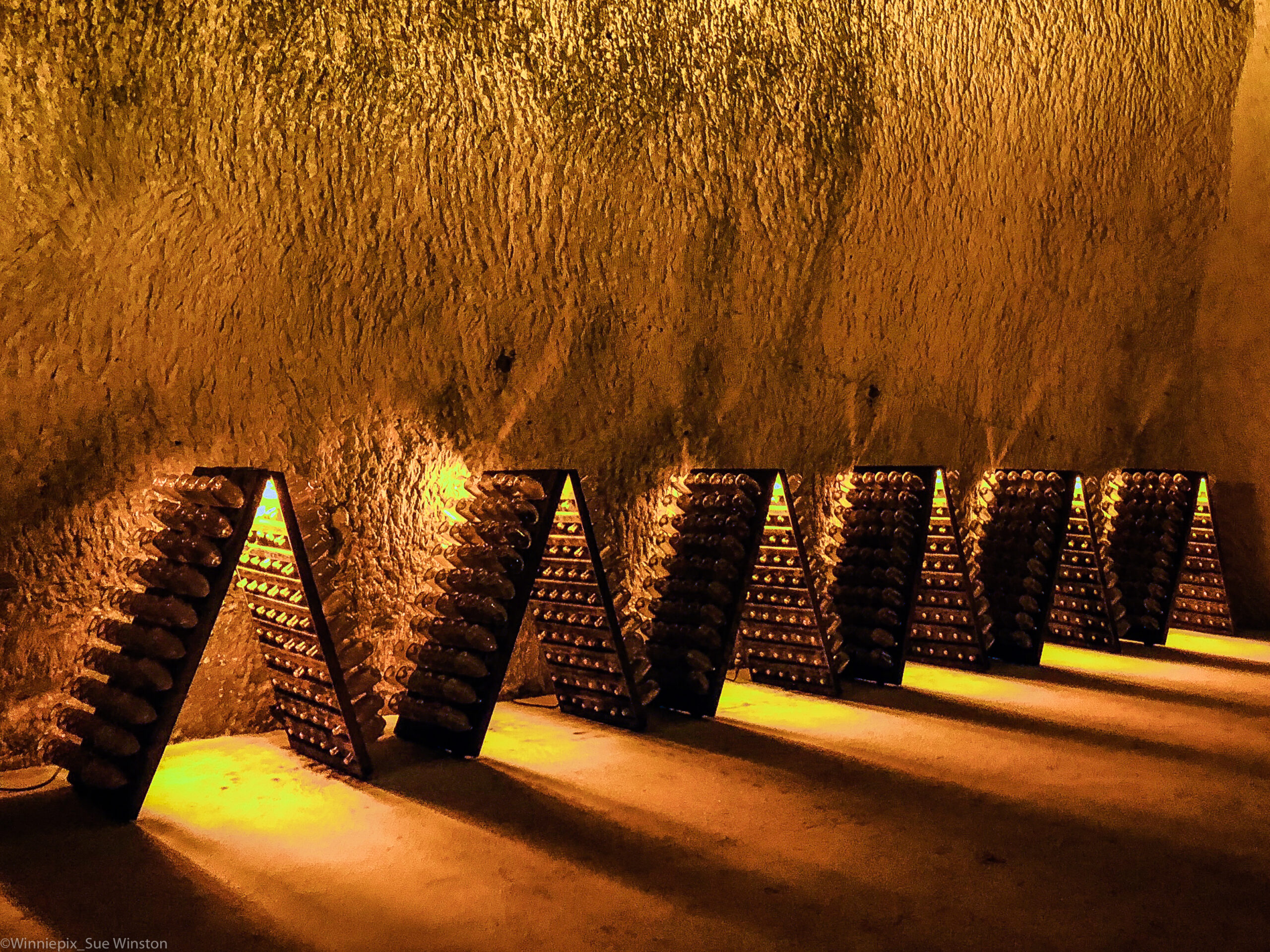
Each winter, in cellars across Champagne, a version of the same ritual plays out. A cellar master sits before dozens of glasses of thin, sharp still wine, each the product of a different village, grape, and parcel, and begins to blend. The goal is not to capture any single one of them. It is to build a wine that tastes like last year’s, and the year before that, and the decade before that. This is assemblage, and for three centuries it has been the soul of Champagne: the art of erasing place and vintage in pursuit of a constant house style.
A growing number of the region’s most closely watched growers now do the opposite. They take a single parcel, in a single year, ferment it on its own, and put the name of the plot on the label. The practice has a French name, parcellaire, and a patron saint in Anselme Selosse, and it amounts to an argument about what Champagne is for.
The Art of Erasure
To see why single-vineyard Champagne feels radical, it helps to understand what it breaks from. Champagne built its reputation on consistency. The famous houses blend across the region’s villages and across several vintages so that a bottle of non-vintage brut tastes the same whoever opens it and whenever they do. Even the region’s quality hierarchy points away from the individual vineyard. Where Burgundy ranks plots, Champagne has always ranked whole villages: the old échelle des crus rated 17 communes as Grand Cru and several dozen more as Premier Cru, a map of towns rather than fields.
Like this? The TERROIR Letter arrives every Thursday.
The label itself half-hides the question of who made the wine. Two small letters near the bottom of every Champagne bottle answer it. NM, négociant-manipulant, marks a house that may buy in grapes; RM, récoltant-manipulant, marks a grower who makes wine only from vines the family farms itself. For most of the modern era the houses defined Champagne and the growers sold them fruit. That has shifted. Grower Champagne, the RM category, has grown to roughly 15 percent of production, the work of several thousand small estates, up from a small fraction a generation ago. It is the ground from which the single-vineyard movement has risen.
After Selosse
The figure most often credited with lighting the fuse is Anselme Selosse, who farms in the Grand Cru village of Avize. Wine Spectator calls him “a north star of the region’s artisanal grower-producer movement.” Selosse championed terroir, dropped pesticides, and fermented on wild yeasts while the houses were still selling uniformity. His Lieux-Dits collection bottles six parcels across six villages on their own, three from Chardonnay and three from Pinot Noir, each meant to taste of its own patch of chalk rather than of a brand.
The growers who followed have pushed the logic further. The one who takes it furthest is Cédric Bouchard, who makes wine as Roses de Jeanne in the Côte des Bar, the warm southern tip of Champagne that sits closer to Chablis than to Reims. Bouchard refuses nearly every tool of the blender. Each of his cuvées comes from a single parcel, a single grape, and a single vintage, finished with little or no added sugar, so that as little as possible stands between the plot and the glass. Bottlings like Les Ursules and La Bolorée are named for the ground they come from, the way a Burgundy grower names a climat. A whole cohort now works in this register, from Ulysse Collin to Chartogne-Taillet, and the great houses have begun to notice.
What Is Actually New
It would be easy to call all of this an invention, and it would be wrong. Single-vineyard Champagne is nearly a century old. Philipponnat has bottled its steep Clos des Goisses on its own since 1935. Krug’s first Clos du Mesnil, from a single walled Chardonnay plot, was the 1979 vintage. The grower Pierre Péters was bottling its Les Chétillons parcel separately as early as 1971. The walled clos and the named lieu-dit are not new ideas in Champagne.
What is new is who is doing it, and why. For most of that history the single vineyard was a house’s crown jewel, one prestige bottling perched atop a vast blended range. In the new movement it is the entire premise of a small estate, the rule rather than the exception, and the name on the label belongs to the farmer who grew the grapes rather than to a brand. Much of the energy comes from the Côte des Bar, long dismissed as a source of bulk fruit for the great houses to the north. Its Kimmeridgian limestone is the same seam that runs under Chablis, barely an hour south, and a generation of growers there have decided their ground is worth naming. It is the same instinct that led Sicily’s producers to map the individual contrade of Etna and Beaujolais to rediscover its 10 crus: the conviction that a specific place has something to say that the blend talks over.
None of this means the house style is in danger. The great blends remain a genuine art, and the winter ritual of the cellar master will outlast everyone now making single-parcel wine. What has changed is that Champagne now holds two ideas at once. One asks whether a wine tastes like the house. The other, the one Selosse made respectable and growers like Bouchard carried to its conclusion, asks something else: what does this plot, in this year, have to say. The place was always there, underneath the blend. What changed is that someone finally decided to bottle it alone.
The TERROIR Letter
The story behind every bottle.
One feature. One dispatch. One bottle worth opening. Every Thursday — free.