

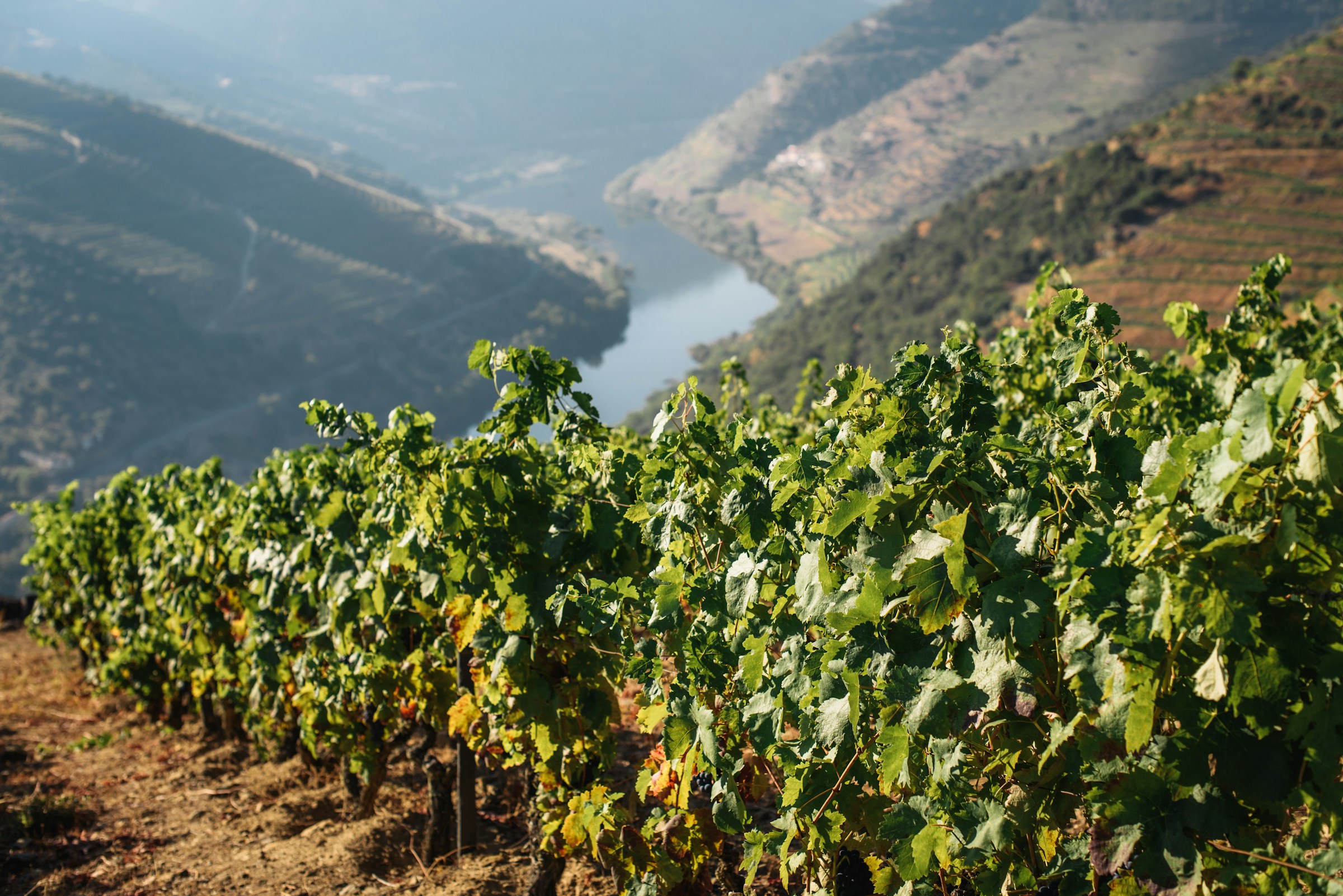
Walk a row in an old California vineyard with someone who has spent a career looking at vines, and the inventory happens through their boots. Three steps in, a leaf with five deep lobes and pale undersides. Two steps further, a leaf with the rounded shoulders and looser canopy of a different grape entirely. Another step, something neither of you can place without snapping off a cluster and rolling a berry between your fingers. The row is not a row of Zinfandel. It is a row of Zinfandel and Carignan and Mourvèdre and Petite Sirah and Alicante Bouschet and ten or fifteen other vines that someone planted a century and a third ago and then never sorted out. At harvest the entire row goes into the same bin on the same morning and ferments as one wine.
That wine is a field blend. The recipe was decided by whoever planted the vineyard, and the planter is long dead, and the vines themselves are now the document. For most of the twentieth century the document was treated as a draftsman’s error. By the early 2000s a small group of California winemakers had begun to read it back as a finished design.
How The Category Almost Disappeared
Field blends were the working method of pre-Prohibition California, planted at scale through the 1880s by immigrant growers from regions where co-planting was already the method at home (the southern Rhône, parts of Italy, the Iberian peninsula, central and eastern Europe). The logic was practical. A vineyard planted to many varieties hedges against vintage risk: when one underperforms, another carries the harvest. Different ripening windows produce a more balanced blend than any single picking date can achieve. The cellar work is simpler because there is no blending decision to make; the blend happened in the soil.
Like this? The TERROIR Letter arrives every Thursday.
Prohibition ended the commercial logic. By the time California’s fine-wine industry rebuilt itself in the 1960s and 1970s, the prevailing model was the single-varietal label: Cabernet from Napa, Pinot Noir from the Russian River, Chardonnay from anywhere it would ripen. Single-varietal labeling is easier to farm, easier to legislate, easier to market. Field blends fit none of those frames. The surviving co-planted parcels were ripped up, top-grafted to a single variety, or sold to bulk producers who fermented them as anonymous red.
What survived survived in fragments. A few hundred acres in Sonoma, a similar number across Contra Costa and Lodi and the Sierra foothills. The vines were a hundred years old before anyone started counting them seriously, and many were ripped up in the years they would have been most valuable.
Bedrock And The Reframe
Morgan Twain-Peterson is the son of Joel Peterson, who founded Ravenswood in 1976 and built the modern Zinfandel category on old-vine sourcing. Twain-Peterson grew up tasting old-vine fruit, took a Master of Wine, and in 2007 founded Bedrock Wine Co. in a converted chicken coop. The thesis underneath the project was that California’s surviving co-planted ancient-vine parcels are not a problem to be solved by sorting them into varietal lots. They are themselves the design.
Bedrock Vineyard in Sonoma Valley, the site the project is named for, was planted in 1888. The land was farmed continuously through Prohibition, through the bulk-wine era, and into the present. The flagship bottling, Bedrock Heritage, is fermented from the entire site as one wine. The producer reports the blend each year as roughly 62 per cent Zinfandel, 19 per cent Carignan, 10 per cent Mourvèdre, and 8 per cent from the other 20-plus varieties co-planted in the same blocks. Jamie Goode, writing on Wine Anorak, has counted 27 different varieties in the planting, with Zinfandel, Carignan, and Mourvèdre dominant. The discrepancy is itself part of the inventory problem. The producer counts what the producer has confirmed; the visiting journalist counts more. A century-old co-planted parcel resists clean accounting.
Bedrock has pursued Regenerative Organic Certification across its ancient-vine sites, and the project’s reach extends well beyond the home vineyard. The same approach has been applied to Evangelho in Contra Costa, Pagani Ranch and Monte Rosso in Sonoma, and other pre-Prohibition parcels. The argument is the same in every case: the field blend was already there. Rehabilitating it is the work.
What The Vineyard Tells The Cellar
The practical consequences are easier to feel in the cellar than to describe on paper. Different varieties ripen at different rates, but in a field blend they are all picked on the same morning, because separating them at harvest defeats the point. Some berries come in slightly underripe, others on the edge of overripe. The mix produces a fermentation internally diversified from the first day. Acidity from the later-ripening Carignan and Petite Sirah balances the Zinfandel’s tendency to push sugar. Mourvèdre and the Rhône-side plantings contribute structure and a darker spectrum the Zinfandel alone would not carry. The aromatic obscurities (mystery whites planted into red blocks, a vine of Alicante Bouschet bleeding teinturier colour into the must) sit in the background as texture more than aroma.
The cellar work is correspondingly hands-off. Once the decision is made to ferment the site as one wine, the editorial moves available to the winemaker are limited: when to pick, how to handle the cap, whether and how long to age in barrel. The blending decision, in the modern sense of selecting and proportioning component lots, has already been made by whoever walked the rows in 1888. A modern Heritage bottling is, in the most literal possible reading, the wine that vineyard makes. The winemaker’s job is to keep faith with it.
Why It Matters Now
The revival has consequences beyond the bottle. Old-vine field-blend parcels in California sit on land valuable enough that the math for keeping them in the ground depends on the price the resulting wine can command. A Heritage bottling that retails north of $40 is the difference between an ancient-vine site continuing as an ancient-vine site and being torn up and replanted to a single variety, or sold for housing. The premium the wine has begun to command is the only economic argument keeping the document intact.
What that buys, when it works, is wines that do not read like any single-varietal Zinfandel, any single-varietal anything. The pre-Prohibition co-planted vineyards were not making “California red blend” in the marketing sense the term carries today. They were making the wine that grew in that particular soil, from that particular mix of cuttings the original grower could obtain. Field-blend Heritage bottlings from Bedrock and the small cohort working alongside it (Carlisle, Turley on its old-vine sites, Sandlands, Birichino) read as the closest contemporary approximation of what those original vineyards were designed to produce.
The label often shows a single appellation and not much else. The back label may list two or three of the dominant varieties. The wine inside is a hundred-and-thirty-seven-year-old design decision that the modern industry mostly forgot how to make. Walking a row at Bedrock and counting the leaf shapes is reading the original draft of a recipe the planter never wrote down on paper because the vineyard was the paper. The work of the modern field-blend revival is to keep that draft legible, and to bottle what it says.
The TERROIR Letter
The story behind every bottle.
One feature. One dispatch. One bottle worth opening. Every Thursday — free.