

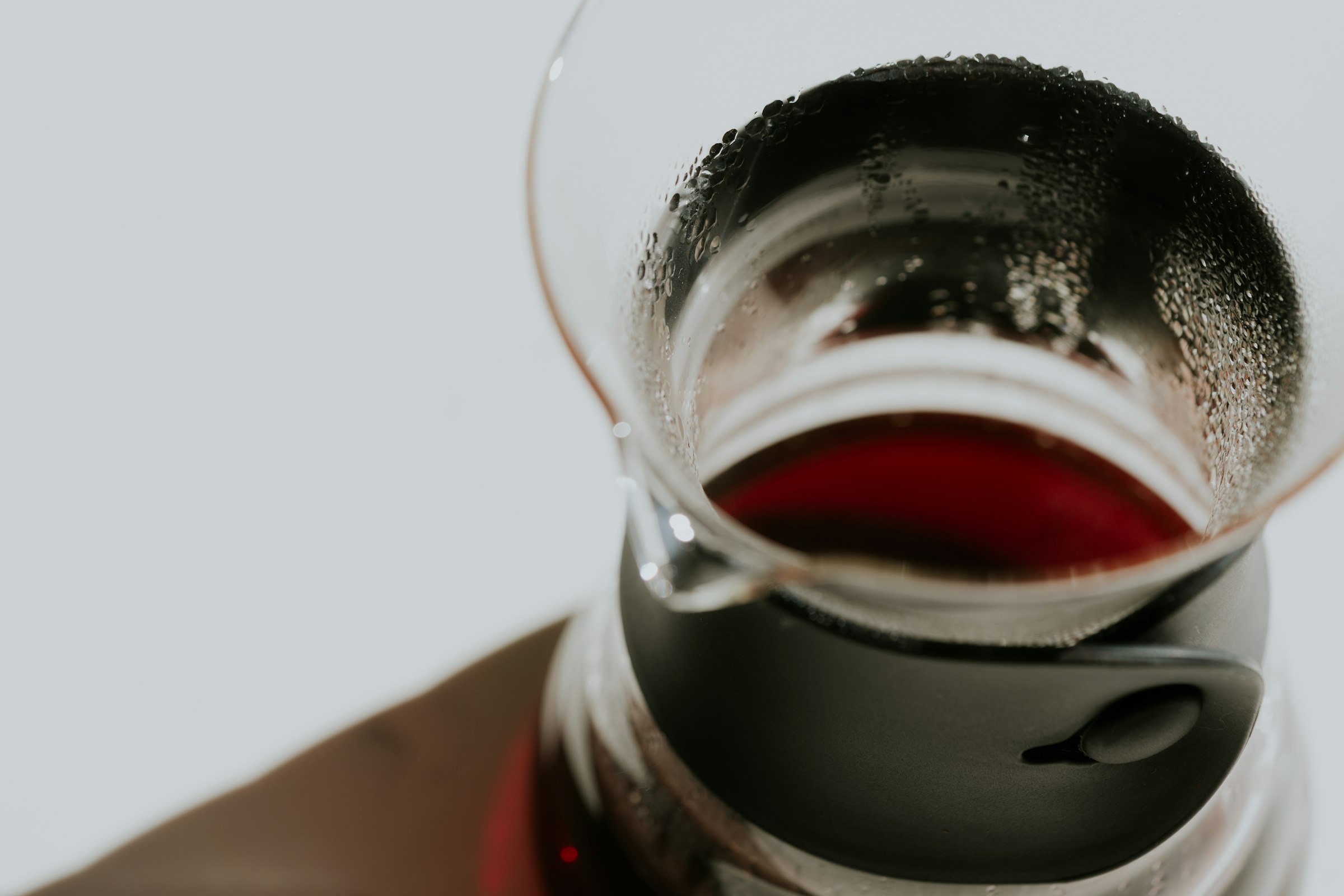
The patient at the headache clinic could drink a vodka soda without consequence. Whisky was fine. Gin was fine. Two glasses of red wine, though, and within an hour she had the kind of headache that closed the evening. She had asked her primary doctor about it for years and been told, each time, that the cause was sulfites. She was now sitting in front of a neurologist at the University of California, San Francisco, and the same word came up again.
The neurologist did not believe her. He believed her headache. He did not believe the explanation.
That gap, between a complaint that is real and a cause that does not survive scrutiny, is where the red-wine-headache story has lived for the better part of forty years. In 2023 a research team at UC Davis and UCSF published a paper that finally proposed something more biochemically plausible. The more useful place to begin is with what the sulfite theory actually claims and why it does not work.
Like this? The TERROIR Letter arrives every Thursday.
The headache predates the hypothesis
People who get headaches from red wine have been writing about it for as long as people have been writing about wine. The complaint is unusual in a clinically specific way. Sufferers can drink almost anything else without trouble. They report no problem with white wine, or only a much smaller problem. The same person can drink the same volume of spirits and walk away clean. Whatever the cause is, it tracks closely with red wine in particular at the volume of an ordinary glass and a half, well below the dose that would explain a hangover.
The sulfite hypothesis took hold because the timing was right. In 1986 the FDA finalised a rule requiring any wine containing more than 10 parts per million of sulfites to carry the now-familiar warning on its back label. The rule was codified at 21 CFR 101.100, and the “Contains Sulfites” line began appearing on American bottles by 1988. The headache complaint already existed. The label looked like an answer. The two were welded together in the popular imagination within a year or two, and they have been welded together ever since.
The dose argument
The sulfite story fails on dose. A typical commercial bottle is finished around 80 to 100 parts per million of sulfur dioxide, which works out to roughly ten to fifteen milligrams in a 150-millilitre pour. The human body, by contrast, produces sulfite endogenously as a normal product of sulfur-containing amino acid metabolism, at quantities measured in hundreds of milligrams a day. A glass of red wine adds to a baseline produced by the drinker’s own gut and liver. It does not introduce the compound from outside.
The comparison to other foods is even less flattering to the hypothesis. Dried apricots are routinely treated with sulfur dioxide to preserve colour and inhibit browning, and the resulting product carries sulfite at levels that can run five to ten times the concentration found in commercial wine. A handful of dried apricots carries more sulfite than a bottle of California Cabernet. Dried apricots are not associated with headaches. They are associated with snack food.
The other tell is that white wine, which is often more heavily sulfited than red because it lacks the natural antioxidant protection of skin tannins, is rarely implicated in the complaint at all. If the chemistry that triggered the headache were sulfite chemistry, the white-wine drinker should be the one nursing the ice pack. They are not. The red-wine drinker is. The story does not fit the molecule it accuses.
The 1988 label and the one percent
The reason the label exists at all has nothing to do with headaches. Beginning in the early 1980s, the FDA began receiving reports of severe asthmatic reactions in a small population of sulfite-sensitive individuals exposed to high doses of sulfiting agents in salad bars and processed foods. The reactions could be acute, occasionally fatal, and they clustered in roughly one percent of asthmatics. The agency’s 1986 final rule, and the wine-label requirement that followed in 1988, was a sulfite-asthma rule. It was written for a specific clinical population at risk of respiratory collapse, and it did the job it was written to do.
It was never a headache rule. Translating “this label exists because some people react badly to sulfites” into “this label exists because sulfites cause headaches” was a misreading reinforced, quietly, by a slice of the natural-wine market that found the misunderstanding commercially convenient. A bottle marketed as “no sulfites added” sells more easily when the public believes sulfites cause hangovers. The myth and the label exist in a feedback loop that explains very little about why anyone’s head hurts.
The Davis-UCSF hypothesis
In November 2023, Apramita Devi and Andrew Waterhouse at the UC Davis Department of Viticulture and Enology, working with Morris Levin at the UCSF Department of Neurology, published a paper in Scientific Reports proposing a new biochemical hypothesis for the red-wine headache. The argument runs through a single enzyme.
Quercetin is a flavonoid concentrated in grape skins. Red wines, macerated on skins during fermentation, end up with substantially more quercetin in solution than whites, which are usually pressed off the skins before fermentation begins. Once ingested, quercetin is metabolised into a circulating form called quercetin-3-glucuronide. The Davis-UCSF team showed in vitro that quercetin-3-glucuronide inhibits aldehyde dehydrogenase 2, the enzyme that clears acetaldehyde from the bloodstream after alcohol consumption. The inhibition is dose-relevant: the team measured an IC50 of 9.6 micromolar, and circulating quercetin-3-glucuronide levels reported after red-wine consumption are in the same range.
If the hypothesis is right, the pathway is as follows. A susceptible drinker consumes a red wine with a high quercetin load. Quercetin-3-glucuronide accumulates in circulation, ALDH2 stops clearing acetaldehyde efficiently, and the toxic intermediate every drinker produces from ethanol builds up. The result, in a population whose ALDH2 was already working at the margins, is the flushing, the inflammation, and the headache that arrives within an hour.
The team has been careful to call it a hypothesis. They have not run the human-subject trial that would close the loop. What they have done is offer the first chemically coherent account of why red wine, in dose-relevant quantities, would produce the precise complaint sufferers describe. It is also one that does not depend on a molecule the label was never about.
The practical implications are modest. If the picture holds up, the headache-prone drinker should prefer wines with lower quercetin loads: whites over reds, light-skinned reds over heavy-skinned reds, Pinot Noir and Gamay over Cabernet Sauvignon, Tannat, and Petite Sirah. None of this is news to a sommelier who has been quietly making the same suggestion for years. It is news that there may finally be a reason for it.
The patient in the UCSF consulting room did not get a cure. She got a working hypothesis, a list of grape varieties to try first, and the acknowledgement that her primary doctor had probably been wrong for a long time. The label on the back of the bottle still says Contains Sulfites. It is still true. It is still not the reason her head hurts.
The TERROIR Letter
The story behind every bottle.
One feature. One dispatch. One bottle worth opening. Every Thursday — free.