

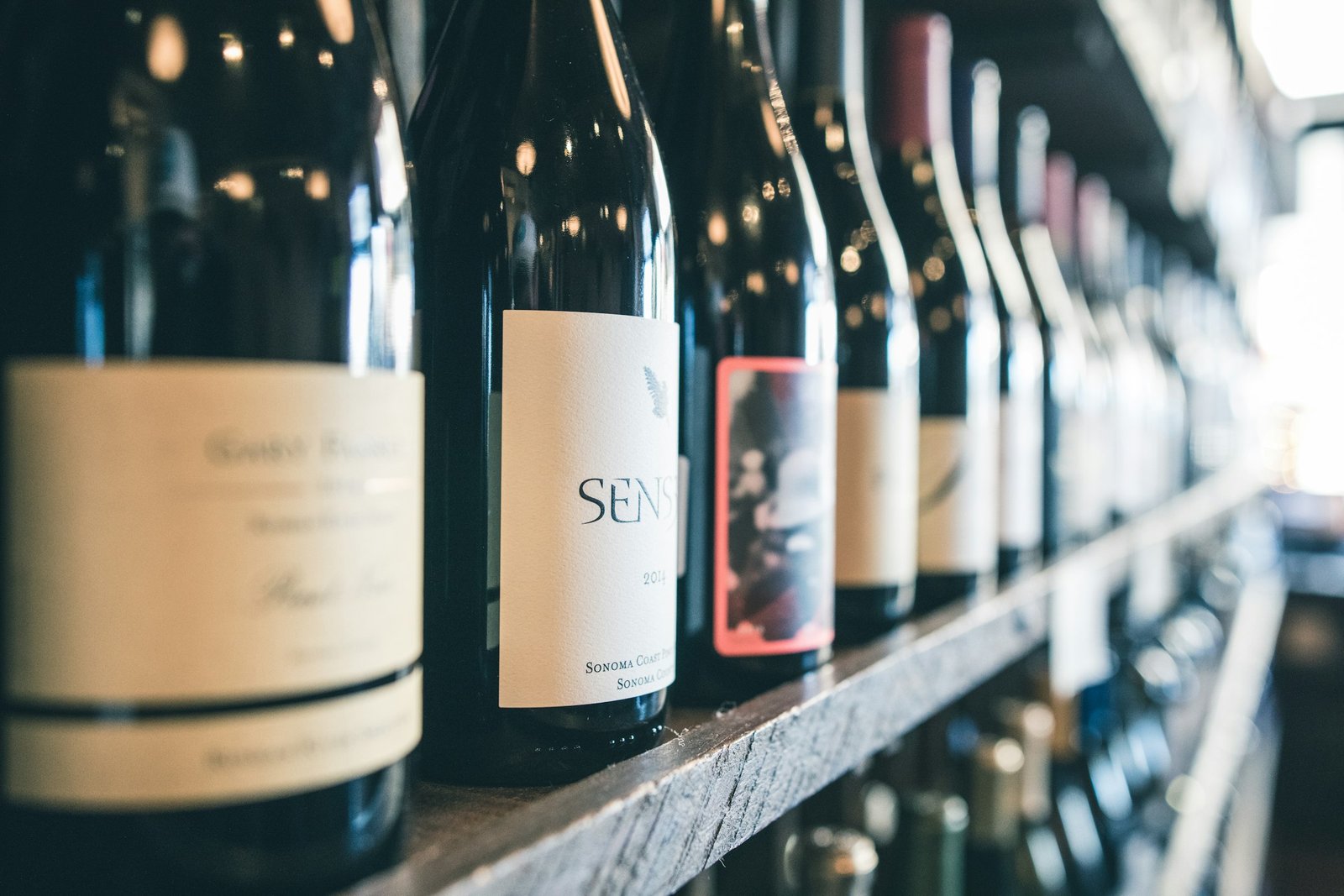
Two bottles sit side by side on a supermarket shelf in Lyon in the autumn of 2027. Both say alcohol-free wine on the front. One contains 0.5 percent alcohol by volume. The other contains 0.05 percent, a tenth as much, and is the only one of the two that also carries the small printed expression “0,0 %.” A shopper reading the front labels alone would have no way to know that one of these wines carries ten times the alcohol of the other. Both are legal. Both are, in the eyes of the European Union, correctly described.
This is not a loophole. It is the text of Regulation (EU) 2026/471, published in the Official Journal on February 26, 2026, and from September 19, 2027, it is the rule across all 27 member states. A fast-growing category of wine is being defined not in a cellar but in an amendment to a labeling article, and the words on the front of the bottle are legal thresholds rather than descriptions of taste.
Three Words, Three Thresholds
The operative language sits in Article 1, point 10, which rewrites the labeling provisions of the EU’s common market organization for wine. Under the EU rules on alcohol-free wine, a wine that has been through a de-alcoholization treatment may use “the term ‘alcohol-free’ if the actual alcoholic strength of the product does not exceed 0,5 % by volume.” That same term is “accompanied by the expression ‘0,0 %’, if the actual alcoholic strength of the product does not exceed 0,05 % by volume.” The second expression is not a separate category. It is a marker that rides on the first.
Like this? The TERROIR Letter arrives every Thursday.
The third term is “reduced alcohol,” reserved for wine whose strength “is above 0,5 % by volume and is at least 30 % below the minimum actual alcoholic strength of the products in the category before de-alcoholisation.” The 30 percent is measured not from the wine’s own starting strength but from the floor its category sets. EU rules put that floor for ordinary still wine at 8.5 or 9 percent depending on where it is grown, which works out to a ceiling of about 6 percent for a reduced-alcohol still wine. A 14 percent red cut to 10 percent has lost nearly a third of its alcohol and qualifies for nothing.
A fourth phrase is mandatory on all of them: “produced by de-alcoholisation.” The reason for legislating is stated in the regulation’s recitals without embarrassment. “Consumers are familiar with terms such as ‘0,0 %’ and ‘alcohol-free’,” reads Recital 22. “However, such terms are regulated differently in different Member States.” The words were already on the shelf. Brussels is catching up to them.
What Changed From 2021
The previous rules, set in Regulation 2021/2117, used different vocabulary and a looser bar. A wine at or below 0.5 percent was “de-alcoholised.” Anything above that, as long as it sat below the category minimum, was “partially de-alcoholised.” Any reduction that crossed the floor qualified.
The 2026 text does four things to that scheme. It renames the terms. It adds the 0.05 percent tier. It requires a 30 percent margin below the floor before a wine may call itself reduced in alcohol. And it addresses two production routes that were previously closed, opening one and promising the other.
The promise concerns blending. A 2024 Commission guidance note had been blunt: mixing de-alcoholized wine back with ordinary wine to hit a target strength was something “the applicable EU legislation does not allow.” The 2026 regulation signals a reversal for partially de-alcoholized wine, on sensory grounds. Recital 20 states that such blending, or coupage, “should be allowed, since it can enhance the sensory characteristics of the final product.” The articles themselves do not yet enact it; the Commission has undertaken to amend the winemaking rules separately. The stated intent does not extend to alcohol-free wine, which must still be produced by taking the alcohol out rather than by diluting it down.
The route that is open concerns bubbles. Recital 21 concedes that the existing rules “impose certain technological limitations on the production of sparkling wine products,” because “the de-alcoholisation process entirely removes the carbon dioxide from the initial sparkling wine.” A producer had to make the wine fizzy, strip the alcohol and the fizz together, and then put the fizz back. The new text allows sparkling and semi-sparkling wines to be made directly from de-alcoholized still wine, by second fermentation or by adding carbon dioxide.
The Same Word Means Less in America
A reader in the United States should not assume the vocabulary travels. Because de-alcoholized wine contains less than 7 percent alcohol, it falls outside the federal alcohol labeling statute and is regulated instead by the Food and Drug Administration. The FDA’s guidance is stricter than Brussels on the one word that matters. “The term ‘alcohol-free’ may be used only when the product contains no detectable alcohol,” it reads. The agency adds that it “does not consider the terms ‘non-alcoholic’ and ‘alcohol-free’ to be synonymous.”
So a wine at 0.4 percent, legally alcohol-free in Lyon from 2027, could not use that phrase in New York. It would have to settle for a statement that it “contains less than 0.5 percent alcohol by volume.” The EU’s new 0.05 percent tier approaches the American standard but does not reach it. The expression that looks like a rounding error is the one that comes closest to meaning what a shopper might assume all of them mean.
Why the Annex Matters
The market being described here is small and growing fast at the edges. IWSR, the drinks-data firm, reported in June 2026 that no-alcohol wine volumes rose in all eight of the key markets it tracks between 2019 and 2024, with annual growth of 23 percent in the United States, 15 percent in Britain, and 27 percent in Canada. Secondary estimates put the category at under 1 percent of global wine volume.
What the regulation does not address is the reason those volumes are still small. Maggie Frerejean-Taittinger, co-founder of the alcohol-free sparkling house French Bloom, put it plainly in a recent interview: “if you simply remove alcohol from a wine made to have alcohol, you get a disappointing result. Dealcoholization strips away the backbone.” By her own estimate, “when you dealcoholize, you lose about 60% of the aromas.” Eva Plazas, winemaker at the Catalan sparkling producer Vilarnau, made the same point: “Alcohol is the structural backbone of all fermented beverages, and removing it inevitably changes the sensory experience.”
The coupage recital and the new sparkling route are, read generously, Brussels’ acknowledgment of that problem. Italy’s move to lift its own ban on de-alcoholizing wine, reported in March 2026, is a smaller version of the same story: until then, Italian producers had been shipping wine to Germany and Belgium to have the alcohol removed, then shipping it home.
None of this will be visible on the shelf in Lyon. What the shopper will see is a word, and behind the word a number the regulation has chosen for it. Alcohol-free will mean not more than 0.5 percent. The small “0,0 %” will mean not more than a tenth of that. Reduced alcohol will mean a strength at least 30 percent below a floor the label does not state. The bottle on the left and the bottle on the right will both be telling the truth. It will simply be a legal truth, measured to the decimal, and nothing in it will say how the wine tastes.
The TERROIR Letter
The story behind every bottle.
One feature. One dispatch. One bottle worth opening. Every Thursday — free.