

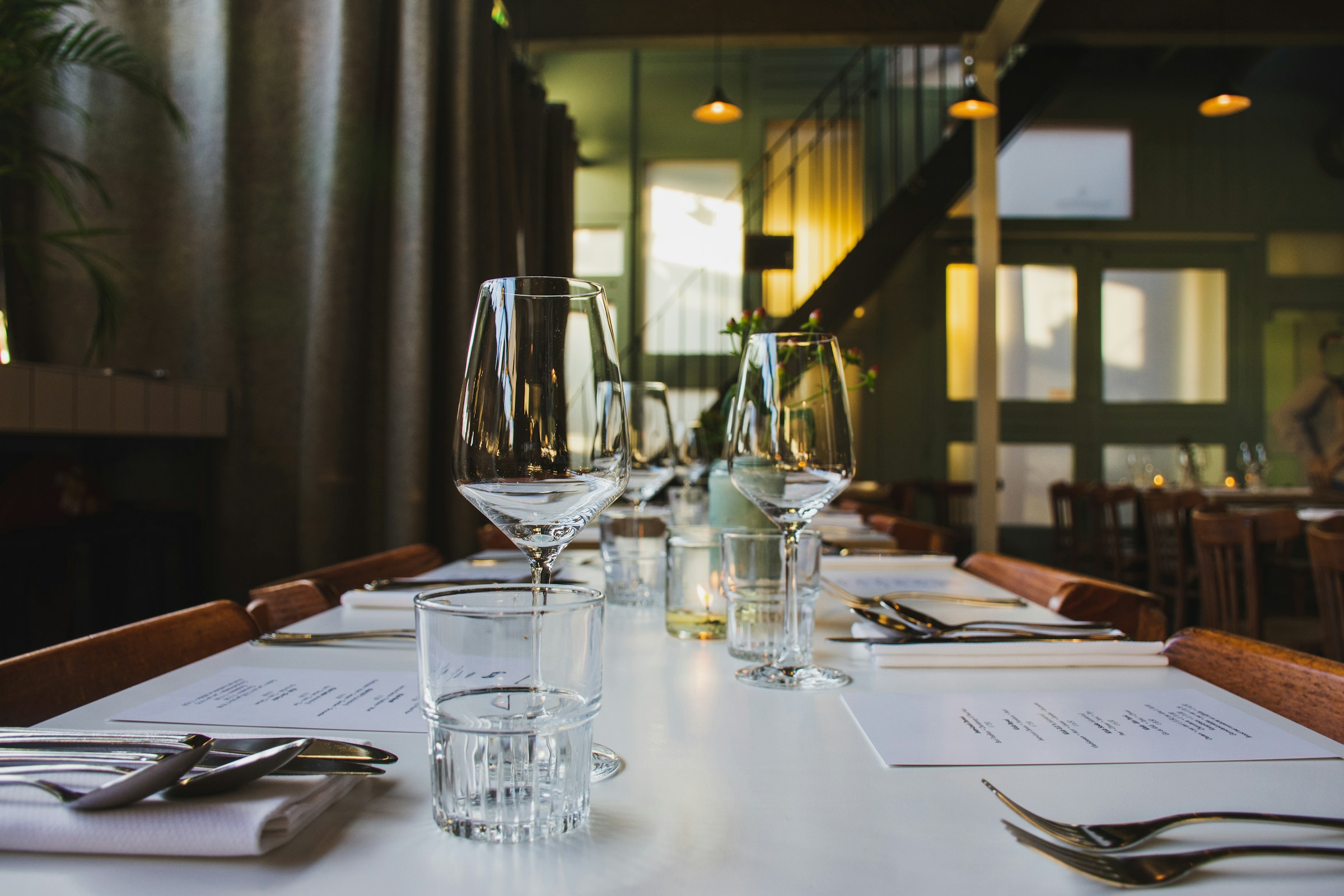
On a Tuesday morning in November, in the small print-out of the by-the-glass list that lives on a clipboard behind the bar, a beverage director crosses out the line that reads Sancerre, Domaine X, $22 and writes underneath it, in pencil, Menetou-Salon, Domaine Y, $16. The list will be retyped before service. The wine will be poured at the same temperature into the same glass. The diners will not be told anything about the change, because there is nothing to tell. The Sauvignon Blanc by-the-glass is now a Menetou-Salon Sauvignon Blanc by-the-glass. The pencil mark on the clipboard is one of thousands made on American wine lists in 2025.
That edit, made almost identically in restaurant after restaurant through the autumn, is what Jameson Wichner of the trade publisher Backbar Academy named on the eighteenth of November as the “Sancerre-pocalypse.” Sancerre has not collapsed as a wine. It has collapsed as a by-the-glass economic unit, and the beverage programs that ran it for two decades as their default white pour have been finding the same answer to the same arithmetic.
The Math That Made the Retirement
The numbers Wichner laid out are the numbers any restaurant beverage program has been staring at since the spring. An “$18-$22 BTG pour on your list’s most popular white” is the lower bound of what a serious Sancerre now has to retail at to keep its margin within the standard restaurant model. Wholesale price into the restaurant has risen on three vectors over the past two years, and the vectors compound.
Like this? The TERROIR Letter arrives every Thursday.
The first is producer cost. The cost of farming a hectare in Sancerre has risen materially since 2022, driven by labour, fertilizer, the rolling expense of organic conversion, and capital expenditure on the cellar equipment the warmer harvests now require. The second is tariff exposure. American import duties on European wine moved repeatedly between 2024 and 2025; importers absorbed some of the cost and passed through the rest. The third is yield. The 2024 vintage in the Loire Centre came in below the ten-year average; the 2021 frosts are still in the cellar arithmetic; the 2023 harvest was workable but not abundant. Less wine to spread the fixed costs over means a higher cost per bottle out of the cellar door.
The three vectors arrive at the restaurant as a wholesale price that, run through the standard 2.5-to-3 times multiplier the by-the-glass program needs to clear its costs, does not leave room for the appellation at the $14 or $15 BTG slot where it used to sit. Sancerre has not become unprofitable as a bottle list-item (restaurants still sell it at $80 to $110), but as the most-poured white at the bar, where the program needs to turn a hundred glasses a week, the appellation has fallen out of the math.
The Kimmeridgian Band Just East
The geological accident the substitution rests on is that Sancerre does not sit alone on its limestone. The Kimmeridgian stage, a band of upper-Jurassic marl laid down between roughly 155 and 149 million years ago, runs in a continuous arc from Chablis down through the Yonne and across the upper Loire into the Cher department where Sancerre’s slopes face the river. It does not stop at the Sancerre côte. It continues a few dozen kilometres west under three smaller appellations: Menetou-Salon on the same Cher plateau, Quincy on the Cher river just below Bourges, and Reuilly further west into the Indre. The same Sauvignon Blanc grape, planted on the same age of marl, makes recognisably similar wines.
This is not a marketing argument; it is the published geology. What separates the appellations is not the rock but the postwar history of who got famous first. Sancerre became the British wine trade’s default Sauvignon Blanc in the 1970s and 1980s; the surrounding villages did not; and the retail price gap between Sancerre and its three neighbours has hovered between 30 and 40 per cent for the past decade. The wine in the glass tells the difference far less clearly than the price tag does.
The Three Satellites and What to Look For
Menetou-Salon, ten kilometres north-west of Sancerre, is the closest match. The appellation was granted in 1959 and covers roughly five hundred hectares across ten communes. The wines are predominantly Sauvignon Blanc with small Pinot Noir for rosé and red. Domaine Henry Pellé has been the appellation’s reference producer for two generations; the “Morogues” cuvée from the family’s home commune is the durable benchmark. A handful of Sancerre growers have bought parcels in Menetou-Salon over the past decade, compressing the quality gap further than the price gap reflects.
Quincy, west of Bourges along the Cher river, is the older AOC, granted in 1936 in the first wave of French appellations. The soils are flintier and lighter than Menetou-Salon’s, more silex and sand over the Kimmeridgian base, and the wines accordingly read leaner and more pointed, closer in style to the silex side of Sancerre than to its marl side. Domaine Trotereau has been working a parcel in Quincy since the early twentieth century and is the producer most worth seeking out at the appellation’s modest top tier.
Reuilly, the smallest and westernmost of the three, lies just over the departmental line into the Indre. The appellation is more diverse in plantings (significant Pinot Gris and Pinot Noir alongside the Sauvignon Blanc), and the soils mix Kimmeridgian marl with sand-and-gravel river terraces. Domaine Sauger has built a small but consistent reputation across the Sauvignon Blanc bottlings, and the appellation’s lighter style works well for the BTG slot where the diner is not asking for the most assertive Sauvignon in the room.
What the Wine List Tells the Diner
The pencil mark on the clipboard is not the diner’s problem to read. Restaurants do not retire one appellation and explain the math to the table; they swap the line and serve the next pour. But the bottle list in autumn 2025 tells a different story than it told in 2023. The Menetou-Salon, Quincy, and Reuilly entries that used to occupy the “interesting” margins of a Loire programme have moved into the central white-wine line items. Sancerre is still on the list as a higher-priced bottle. It is no longer the default pour.
What the substitution announces is that the appellation hierarchy of the Loire Centre, like most appellation hierarchies, has reflected reputation more than terroir. The Kimmeridgian band does not stop at the Sancerre boundary, and the Sauvignon Blanc grown on it does not stop being good wine when it crosses. The economics of the by-the-glass list have done what a generation of wine writers could not: they have introduced the American restaurant diner to three smaller Loire Centre appellations as an everyday matter of what is in the glass, rather than as a footnote about value.
By next year the pencil mark on the clipboard will have been typed into the menu file, and the Menetou-Salon at $16 will be the wine the table gets when it asks for the white by the glass. The Sancerre-pocalypse, as Wichner named it on the eighteenth of November, is a name for what has already happened.
If you buy through a link in this article, TERROIR may earn a commission. Disclosures
The TERROIR Letter
The story behind every bottle.
One feature. One dispatch. One bottle worth opening. Every Thursday — free.